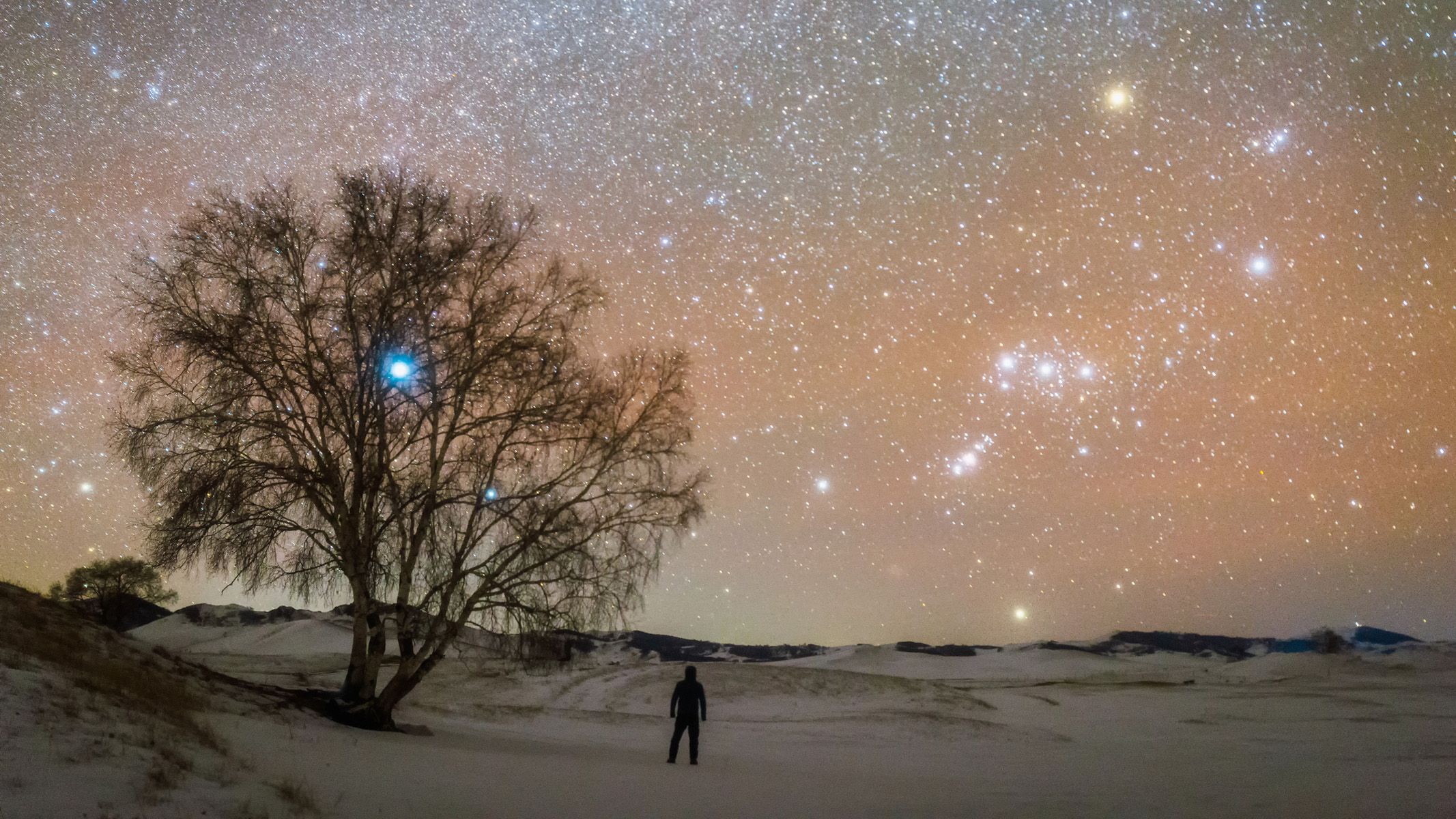

"Unlock the Winter Night Sky: A Stargazer’s Guide to Binocular Astronomy"
Winter Stargazing: A Guide to Binocular Astronomy in the Northern Hemisphere
As winter blankets the Northern Hemisphere, stargazers are presented with a unique opportunity to explore the night sky. The long, cold nights not only enhance visibility but also create an enchanting backdrop for celestial observations. With the right pair of binoculars, the experience of stargazing transforms from a simple pastime into a profound journey through the cosmos.
The Allure of Binocular Astronomy
Binoculars provide a gateway to the universe, revealing layers of stars, open clusters, and nebulas that are often invisible to the naked eye. Unlike telescopes, binoculars offer a more natural and relaxed viewing experience, allowing users to sweep the sky with both eyes open. This immersive experience is not only accessible but also affordable, requiring just a warm coat, a dark location, and a steady pair of hands.
Choosing the Right Binoculars
For optimal stargazing, consider binoculars with specifications such as 7×50, 8×42, or 10×50. These models strike a balance between magnification and light-gathering ability, making them ideal for observing celestial objects.
Key Celestial Targets for Winter Stargazing
1. Sirius: The Kaleidoscope Star
Sirius, the brightest star in the night sky, is located in the constellation Canis Major. Its blue-white light refracts through Earth’s atmosphere, creating a dazzling display of colors. During winter, when Sirius is low in the sky, its twinkling can be particularly vibrant. Observing Sirius through binoculars reveals a stunning spectrum of hues, making it a must-see for winter stargazers.
2. Jupiter at Opposition
Jupiter reaches opposition approximately every 13 months, with the next occurrence on January 10, 2026. At this time, the planet is closest to Earth and fully illuminated by the sun. Using binoculars, observers can spot Jupiter’s four Galilean moons—Europa, Callisto, Ganymede, and Io—arrayed around the giant planet, providing a captivating view.
3. First Quarter Moon
Contrary to popular belief, the best time to observe the moon is not during a full moon but rather at the first quarter phase. This is when shadows cast by craters and mountains create dramatic contrasts along the lunar terminator. Binoculars magnify these features, allowing for a spectacular close-up view. The first quarter moon is also conveniently visible from dusk until midnight.
4. The Owl Cluster (NGC 457)
Located in the constellation Cassiopeia, the Owl Cluster is an open star cluster approximately 9,000 light-years away. It contains nearly 100 stars, with its distinctive yellow and blue stars resembling the eyes of an owl. Positioned beneath the ‘V’ shape of Cassiopeia, this cluster is easily accessible with binoculars.
5. A Supermoon Rising
While full moons are generally not ideal for binocular observation, catching a supermoon as it rises can be breathtaking. The moon appears larger and is often tinted orange due to atmospheric scattering. Notable supermoons in the upcoming months include the Cold Supermoon on December 4, 2025, the Wolf Supermoon on January 3, 2026, and the Snow Moon on February 1, 2026.
6. Auriga’s Star Clusters
The constellation Auriga, prominent in winter, hosts three notable star clusters: M36, M37, and M38. These clusters can be viewed together in the field of most 10×50 binoculars, providing a rich visual experience.
7. Winter Milky Way
While summer is often celebrated for its Milky Way views, winter offers a unique perspective. Stargazers can scan between the constellations of Orion and Cassiopeia to witness the dense star fields of our galaxy’s spiral arms. The crisp winter air enhances visibility, making the stars appear more glittering and vibrant.
8. Caroline’s Rose (NGC 7789)
This open cluster in Cassiopeia, discovered by Caroline Herschel in 1783, features a dense arrangement of stars that resemble a rose. It is an excellent target for binoculars, especially when located near the star Caph.
9. Earthshine on the Moon
Earthshine is a phenomenon that occurs when sunlight reflects off Earth and illuminates the dark side of the moon. This effect is most visible during the crescent phase, particularly around new moons. Observers can catch this stunning sight for a few nights on either side of the new moon phases on December 19, 2025, and January 18, 2026.
Conclusion
Winter offers a unique and rewarding opportunity for stargazing in the Northern Hemisphere. With the right binoculars and a clear night sky, enthusiasts can explore a plethora of celestial wonders. Whether it’s the vibrant colors of Sirius, the majestic presence of Jupiter, or the intricate details of the moon, the winter sky is a treasure trove waiting to be discovered. So bundle up, grab your binoculars, and embark on a journey through the cosmos this winter.