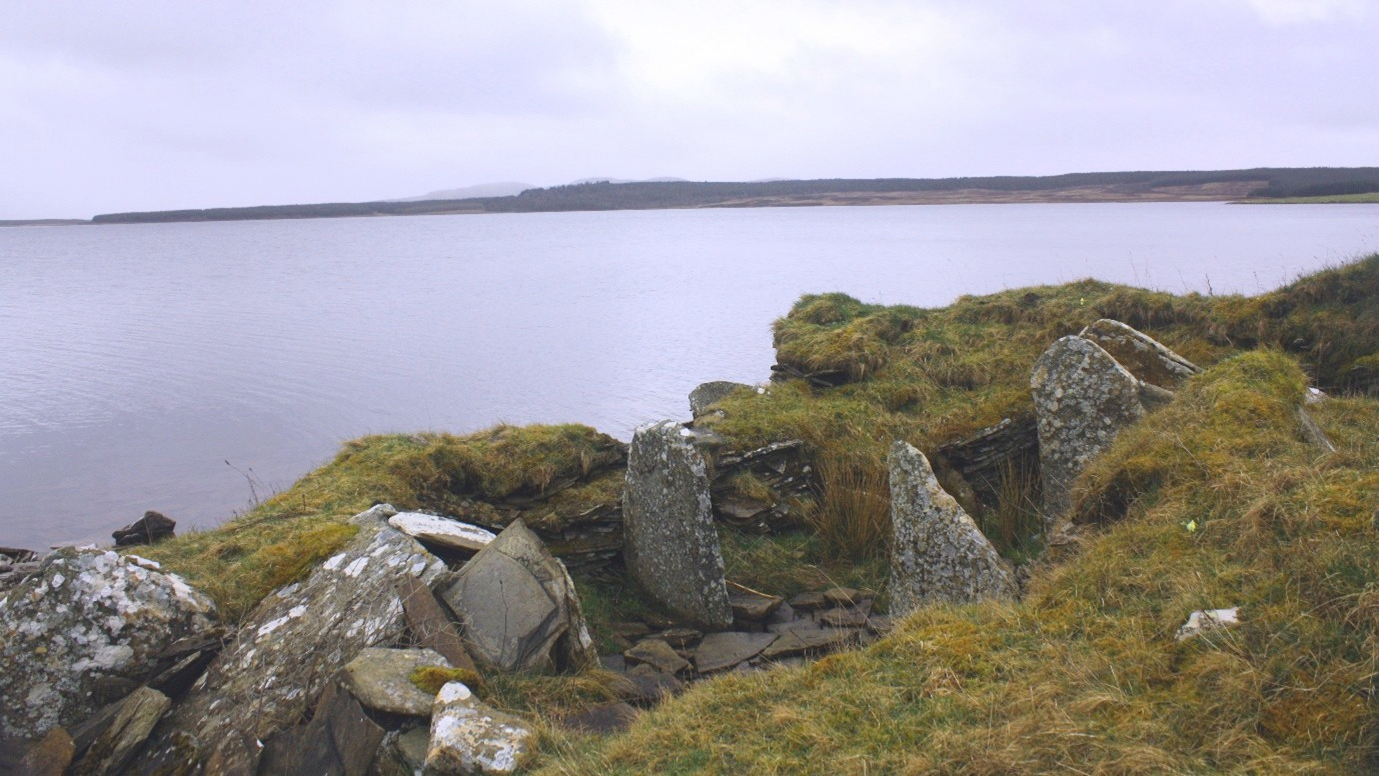

Unearthing the Past: How DNA Reveals Male Kinship in Neolithic Scotland’s Tombs
New Study Reveals Patrilineal Burial Practices in Neolithic Scotland
A groundbreaking study published in the journal Antiquity has unveiled significant insights into the burial practices of Stone Age communities in northern Scotland. Researchers analyzed the DNA of 22 individuals from five ancient tombs located in Caithness and the Orkney Islands, dating back to between 3800 and 3200 B.C. This period marks a pivotal transition from foraging to farming in prehistoric Scotland.
Key Findings
The study, led by archaeologists Vicki Cummings from Cardiff University and Chris Fowler from Newcastle University, highlights a distinct pattern in the burial of males and females. The analysis revealed that related males were often interred together, forming what the researchers describe as "webs of descent." In contrast, female skeletons did not exhibit close genetic relationships, with the closest connections being fifth-degree relatives, equivalent to first cousins once removed.
Among the notable findings:
-
Male Lineage: The tombs contained father-son pairs, brothers, and half-brothers, indicating a strong emphasis on patrilineal descent. One tomb at Loch Calder uniquely housed a father, son, and grandson together, marking a rare discovery in Neolithic burial practices.
- Female Relationships: While no close female relatives were found interred together, two females from Orkney were genetically linked to males buried on the mainland. This suggests that women may have played a crucial role in maintaining familial connections across regions.
Implications of the Study
The results of this research challenge previous assumptions about social structures in Neolithic Scotland. For years, experts speculated that communities were organized along male lines, and this study provides concrete evidence to support that notion. Cummings noted, "These results are consistent with the interpretation that patrilineal descent was traced in this region. For the people introducing the Neolithic into Britain, this social connection may have been as important as pots, cows, and axes."
The findings also raise intriguing questions about the role of women in these societies. Although the study indicates that females were not buried alongside close relatives, their genetic ties to males across different tombs suggest they may have been integral in fostering social networks.
Methodology
The research team utilized advanced ancient DNA analysis techniques to examine the remains, which had become scattered and degraded over nearly 6,000 years. This innovative approach allowed the researchers to reconstruct familial relationships that were previously obscured by time.
Conclusion
This study not only enriches our understanding of Neolithic burial practices in Scotland but also sheds light on the social dynamics of early agricultural societies. By emphasizing the importance of male lineage, it opens new avenues for exploring the complexities of kinship and community organization in prehistoric Europe.
For further reading, the full study can be accessed here.