
"Delhi’s Air Crisis: A Toxic Winter Sparks Protests and Political Fallout"
New Delhi Faces Severe Air Quality Crisis: Protests Erupt Amid Government Criticism
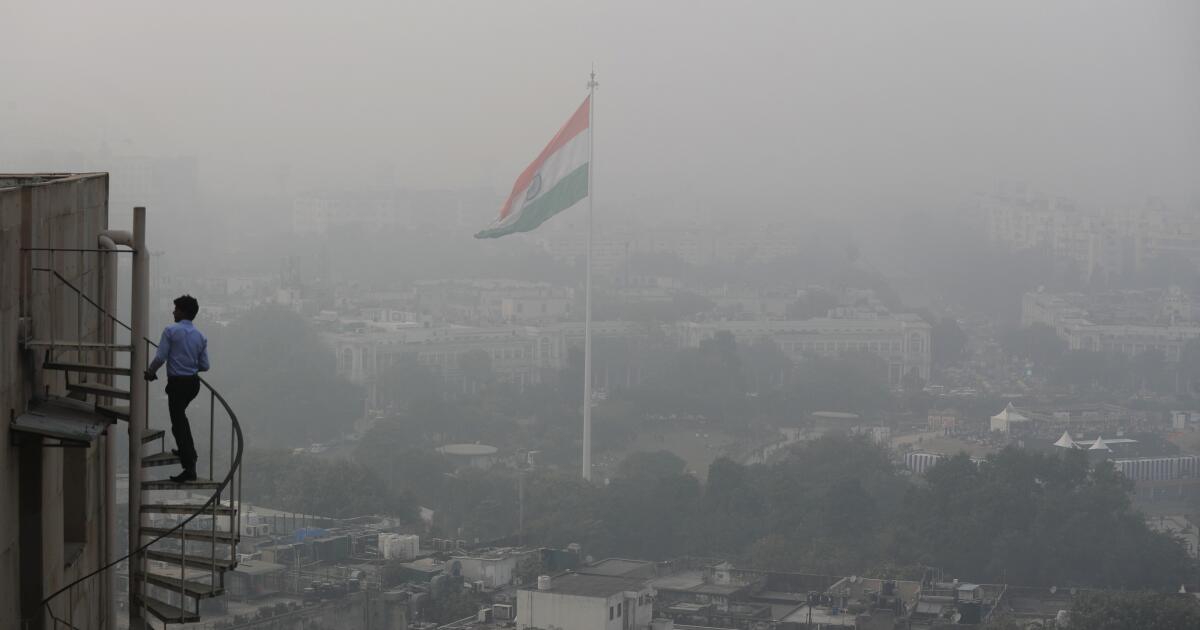
New Delhi, India — This winter, New Delhi has recorded its worst air pollution levels in nearly a decade, igniting public protests and drawing sharp criticism towards Prime Minister Narendra Modi’s Bharatiya Janata Party (BJP) over its management of the air quality crisis.
According to calculations by Bloomberg based on official data, the air quality index (AQI) in New Delhi exceeded 300 on 88% of days during November and December, marking the highest percentage since at least 2017. The U.S. Environmental Protection Agency categorizes an AQI reading of 50 as acceptable, while levels above 300 are classified as hazardous. Alarmingly, the average AQI for December 2023 was recorded at 350.4, the highest since 2018.
Contributing Factors to Pollution
New Delhi has long struggled with air pollution, particularly during the winter months when a combination of crop burning in neighboring states, heavy traffic congestion, and cold weather conditions exacerbate the smog. The city consistently ranks among the most polluted in the world, posing significant health risks to its 30 million residents, especially children.
The current pollution crisis has emerged as a critical challenge for Modi’s government, which is in its first year of governing the capital after nearly two decades of rule by the Aam Aadmi Party (AAP). Despite campaign promises to address pollution, the BJP’s response has faced scrutiny from both the opposition and the public.
Government Response and Public Outcry
In recent parliamentary sessions, lawmakers failed to prioritize discussions on air pollution, which has fueled public frustration. Environmental lawyer Ritwick Dutta expressed concern over the government’s silence on the issue, stating, “The constant silence of the government itself in addressing the issue added to the anger.”
Opposition parties, particularly the AAP, have accused the BJP of underreporting pollution statistics, a claim the ruling party has denied. Delhi Chief Minister Rekha Gupta has shifted blame to the previous administration, asserting that her government requires at least 27 months to implement effective solutions.
As Modi promotes India as a rising global power, the persistent air quality crisis threatens to tarnish that image. Reports indicate that health concerns related to pollution have led to resignations from key positions, including the finance chief of Akums Drugs and Pharmaceuticals Ltd.
Public Protests and Visible Discontent
This year has seen a notable increase in public protests against the pollution crisis. During a recent event featuring Argentine football star Lionel Messi, attendees chanted “AQI, AQI” as Gupta took the stage, highlighting the growing discontent among residents.
The winter smog is primarily driven by factors such as crop burning, firecrackers, vehicular emissions, industrial activities, and ongoing construction dust. The situation worsened after the Supreme Court eased restrictions on firecrackers ahead of Diwali in October, a decision supported by the BJP-led government, despite the already deteriorating air quality.
Broader Implications and Future Actions
The pollution crisis extends beyond New Delhi, with major cities like Mumbai also reporting declining air quality. A recent analysis by the Centre for Research on Energy and Clean Air revealed that all 33 states and union territories assessed had breached air quality guidelines established by the World Health Organization.
In response to the November protests, the government implemented stricter anti-pollution measures, including a temporary halt to non-essential construction and advising primary schools to shift to online classes. However, these measures have yet to yield significant improvements. The BJP has also explored controversial solutions such as artificial rain, which have proven largely ineffective.
Kalyani Tembhe, deputy program manager at the Centre for Science and Environment, remarked, “Right now, we are going one step ahead and two steps backward. The sheer amount of pollution that is getting added in Delhi is so high that we just tend to play catch-up with pollution rather than having actually mitigated it.”
As New Delhi grapples with this pressing environmental crisis, the effectiveness of government responses and the public’s demand for accountability will likely shape the political landscape in the months to come.