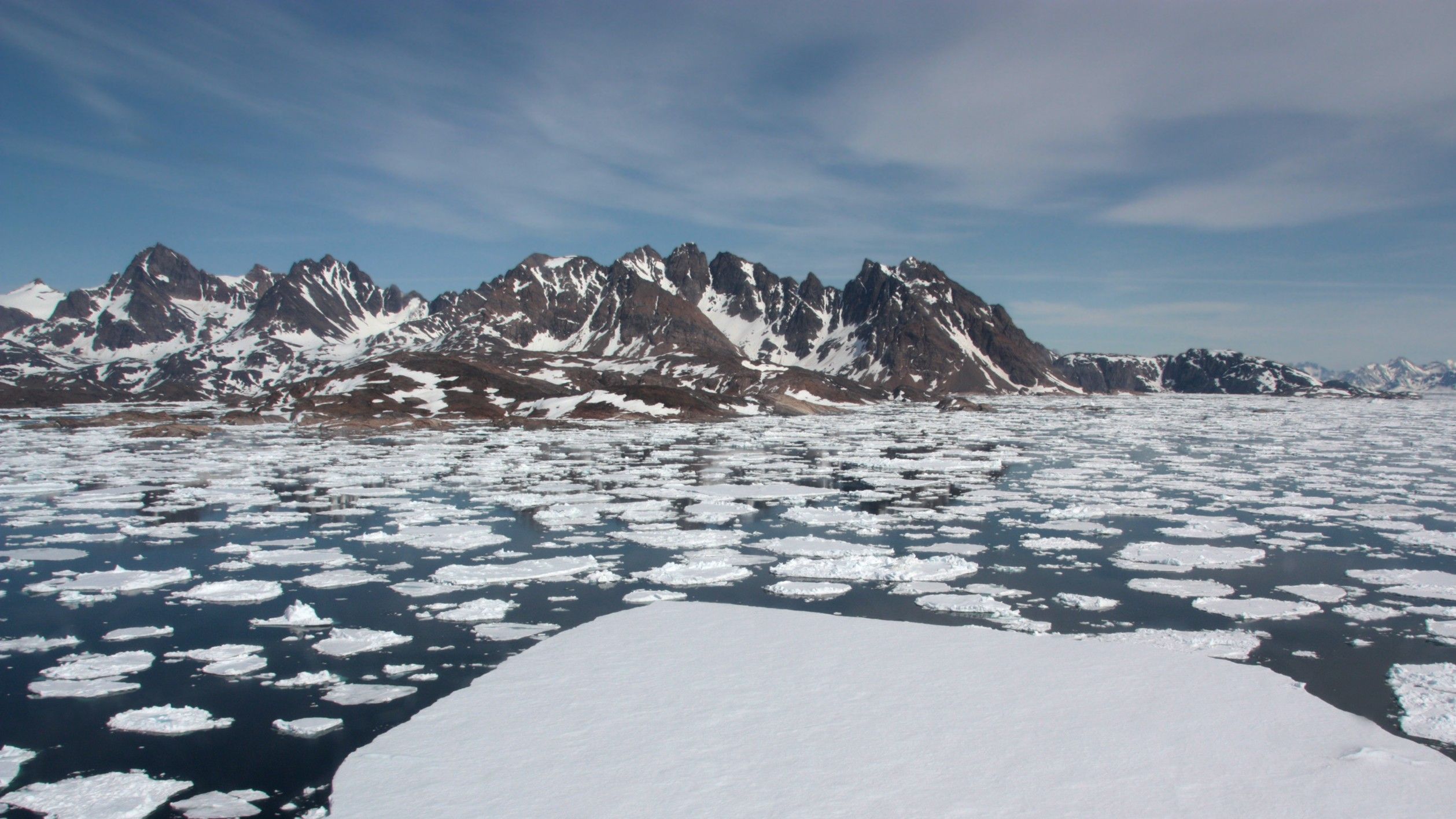

"Unraveling the Arctic: How El Niño’s Tipping Point is Accelerating Sea Ice Loss"
New Study Reveals Tipping Point in El Niño’s Impact on Arctic Sea Ice Loss
Date: October 10, 2023
Source: Science Advances
In a groundbreaking study published in Science Advances, researchers have identified a significant tipping point that has intensified the effects of the El Niño-Southern Oscillation (ENSO) on sea ice loss in the Arctic, particularly in the Laptev and East Siberian seas northeast of Russia. This research sheds light on the complex interactions between climate phenomena and their implications for global weather patterns and maritime safety.
Understanding ENSO and Its Global Impact
ENSO is a climate phenomenon characterized by variations in air pressure and sea surface temperatures in the tropical Pacific, occurring over multiple years. These fluctuations can have far-reaching effects on weather patterns worldwide, influencing the frequency of hurricanes, droughts, and other extreme weather events.
The study, led by atmospheric scientist Cen Wang from The Hong Kong University of Science and Technology, reveals that since around the year 2000, the transitions between El Niño and La Niña phases have accelerated, leading to a pronounced impact on Arctic sea ice coverage.
Key Findings of the Study
The research team analyzed monthly data on sea surface temperatures and sea ice concentration from 1979 to 2023. They discovered that the rapid transitions out of the El Niño phase have resulted in colder surface waters in the central and eastern Pacific, which subsequently influence weather patterns in the Arctic.
-
Accelerated Transitions: After 2000, the transitions from El Niño to La Niña began to occur more quickly, likely due to interactions with the Pacific Decadal Oscillation, another long-term climate cycle affecting Pacific temperatures.
-
Formation of Cold Patches: These accelerated transitions have led to the formation of colder areas in the Pacific, which in turn have pushed a high-pressure system known as the Western North Pacific Anticyclone (WNPAC) northward toward the Arctic.
- Impact on Arctic Weather: The northward movement of the WNPAC has resulted in the formation of another anticyclone over the Laptev and East Siberian seas. This interconnected system draws heat and moisture from the North Pacific into the Arctic, contributing to significant sea ice loss during the fall months following ENSO transitions.
Implications for Maritime Safety and Climate Predictions
The findings of this study have critical implications for maritime safety in the Arctic region. As sea ice coverage diminishes, shipping routes may become more navigable, but this also raises concerns about environmental impacts and the potential for increased human activity in fragile ecosystems.
Cen Wang emphasized the importance of understanding these dynamics: "Sea ice can make a significant impact on the Arctic climate and maritime safety." The study’s results could enhance predictions of sea ice coverage, providing valuable information for ships traversing these waters.
Natural Cycles vs. Human Influence
While the researchers assert that the changes observed since 2000 are primarily due to natural climate cycles, they acknowledge that anthropogenic climate change introduces significant uncertainty into predictions of long-term ice changes. Xiaojun Yuan, a physical oceanographer at Columbia University’s Lamont-Doherty Earth Observatory, noted that human-caused climate change could potentially override some of the natural patterns observed in these long-term oscillations.
Future Research Directions
Looking ahead, the research team plans to further investigate the effects of anthropogenic climate change on Arctic sea ice dynamics. Understanding these interactions will be crucial for developing accurate climate models and predicting future changes in the Arctic environment.
As the impacts of climate change continue to unfold, studies like this one are vital for informing policy decisions and enhancing our understanding of the complex relationships between global climate systems.