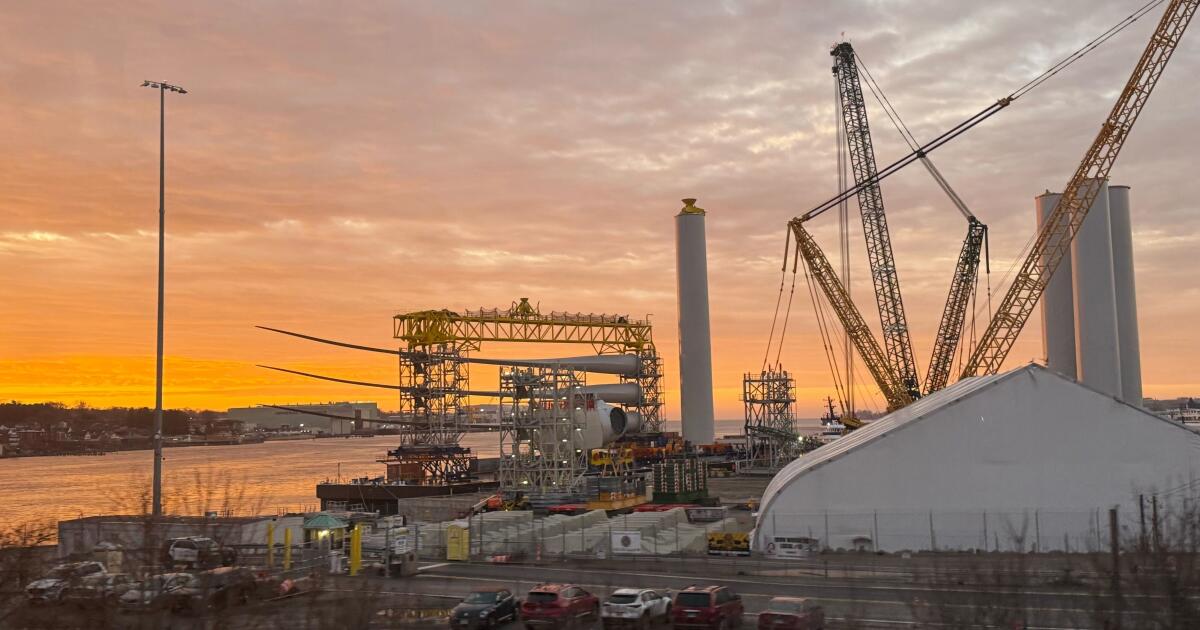

"Wind Power Resurgence: Federal Judge Clears Path for Sunrise Wind Project to Energize 600,000 New York Homes"
Federal Judge Clears Path for Sunrise Wind Project, Resuming Construction After Trump Administration Halt
Washington, D.C. — In a significant ruling, U.S. District Judge Royce Lamberth has allowed the Sunrise Wind project to resume construction, marking a pivotal moment for offshore wind energy in the United States. This decision comes as the fifth offshore wind initiative to be reinstated following a controversial halt imposed by the Trump administration in December 2020, which cited national security concerns.
The Sunrise Wind project, spearheaded by Danish energy company Ørsted, aims to generate 924 megawatts of clean energy—enough to power approximately 600,000 homes in New York. Currently, the project is about 45% complete and is expected to be operational by next year.
Legal Background
The Trump administration’s freeze on five major offshore wind projects, including Sunrise Wind, was enacted just days before Christmas 2020. The administration claimed that these projects posed an imminent national security risk, a stance that has been met with skepticism and legal challenges from developers and state officials. White House spokesperson Taylor Rogers reiterated the administration’s position, labeling wind energy as “the scam of the century” and asserting that the pause was necessary to protect American citizens.
In his ruling, Judge Lamberth found that the government had failed to substantiate its claims regarding national security threats posed by offshore wind energy. This decision echoes a previous ruling from January, which allowed the Revolution Wind project to proceed, further establishing a legal precedent for the resumption of offshore wind construction.
Economic Implications
The halt in construction has had significant financial repercussions for developers, with Sunrise Wind reporting losses of at least $1.25 million per day due to the stop-work order. If construction had not resumed by early February, the project faced the risk of cancellation, according to court documents. The Bureau of Ocean Energy Management (BOEM) has not commented on whether the administration plans to appeal the ruling.
Hillary Bright, executive director of the offshore wind advocacy group Turn Forward, emphasized the urgency of these projects. “At a time when electricity demand is rising rapidly and grid reliability is under increasing strain, these projects represent critically needed utility-scale power sources that are making progress toward completion,” she stated.
Broader Context
The Sunrise Wind project is part of a larger movement toward renewable energy in the United States, especially along the East Coast. Other projects that have recently been cleared to resume include Empire Wind in New York, Coastal Virginia Offshore Wind in Virginia, and Vineyard Wind in Massachusetts. Collectively, these projects are expected to generate six gigawatts of electricity, enough to power 2.5 million homes and businesses.
New York Governor Kathy Hochul hailed the ruling as a “big win” for the state, asserting that “energy independence is national security.” The state’s Attorney General, Letitia James, had previously filed a lawsuit against the Trump administration, arguing that the construction pause jeopardized New York’s economy and energy grid.
Political Reactions
The ruling has drawn varied responses from political figures. Rhode Island Senator Sheldon Whitehouse, the top Democrat on the Senate Environment Committee, criticized the Trump administration’s claims regarding security and the costs associated with wind power. “Enough is enough,” he stated, calling the administration’s attempts to stifle the offshore wind industry “irrational and unpredictable.”
Despite former President Trump’s disparaging remarks about wind energy, including characterizing windmills as “ugly,” Ørsted has assured that the Sunrise Wind project will be located at least 30 miles off the coast of Long Island, making it virtually unnoticeable from the shore.
Conclusion
As the Sunrise Wind project gears up to resume construction, it symbolizes a broader shift toward renewable energy in the U.S. The legal victories for offshore wind projects not only highlight the resilience of the renewable energy sector but also underscore the ongoing tensions between environmental initiatives and political agendas. With electricity demand on the rise and the need for sustainable energy sources more pressing than ever, the future of offshore wind in America appears to be on a more stable path.