
"Washington State Faces Catastrophic Flooding: Emergency Declared as Rivers Surge and Residents Evacuate"
Mount Vernon, Wash. — State of Emergency Declared Amid Torrential Rain and Flooding
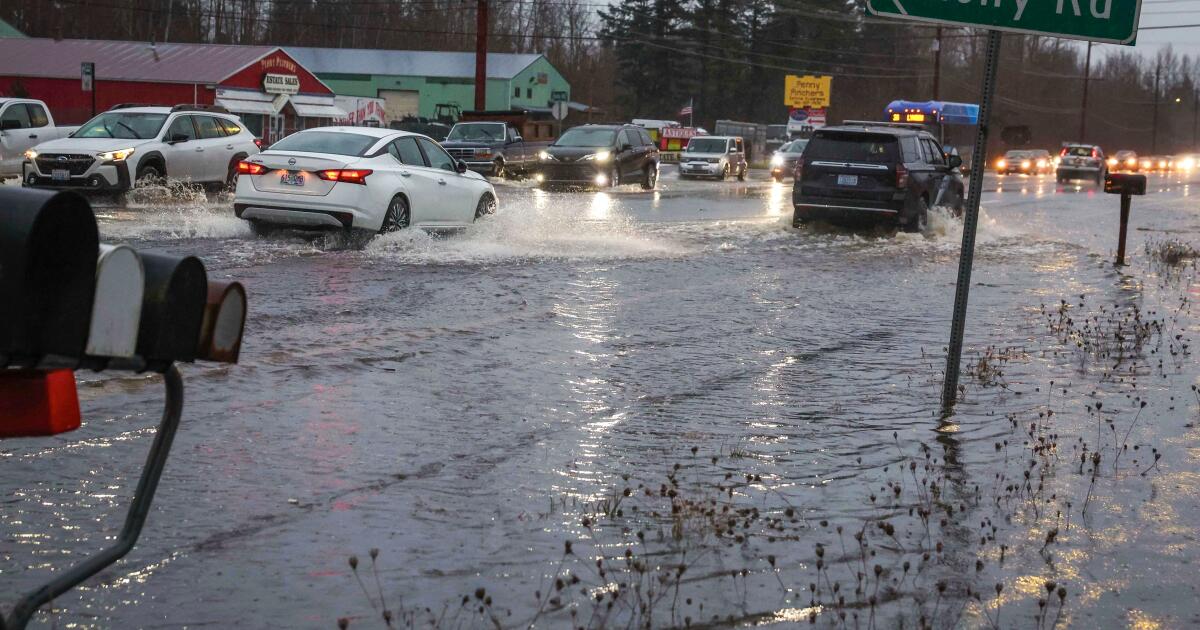
Washington state is grappling with severe weather conditions as a state of emergency was declared on Wednesday night due to relentless torrential rain. The downpour has resulted in overflowing rivers, mudslides, and widespread flooding, prompting evacuation orders for tens of thousands of residents.
Heavy Rainfall and Immediate Impact
As of Thursday morning, heavy rain continued to batter various regions, particularly in the Cascade Mountains, where some areas recorded up to 6 inches of rain within a 24-hour period. The National Weather Service reported that Snoqualmie Pass received an additional 1.7 inches in just six hours. This deluge has led to significant road closures, water rescues, and the suspension of Amtrak services between Seattle and Vancouver.
Governor Bob Ferguson emphasized the gravity of the situation, stating, “Lives will be at stake in the coming days.” Skagit County, a vital agricultural area north of Seattle, has already issued evacuation orders for residents living within the Skagit River’s floodplain.
Rescue Operations and National Guard Deployment
In response to the escalating crisis, hundreds of National Guard members are being deployed to assist local communities. Gent Welsh, adjutant general of the Washington National Guard, confirmed that teams are prepared to support water rescues and other emergency operations.
In Pierce County, southeast of Seattle, sheriff’s deputies conducted rescues at an RV park in Orting, where one man was helped through waist-deep water while wearing a Santa hat. The town has also issued evacuation orders due to the dangerously high levels of the Puyallup River.
Infrastructure Damage and Road Closures
The severe weather has caused significant infrastructure damage, including a landslide that blocked part of Interstate 90 east of Seattle. Images from Eastside Fire & Rescue depicted vehicles trapped under fallen trees, branches, and mud. Additionally, a mountainous section of U.S. 2 has been closed due to debris.
As of Thursday, over 17,000 customers in Washington were without electricity, according to PowerOutage.us, highlighting the widespread impact of the storm.
Flooding Rivers and Record Levels
The Skagit River is projected to crest at approximately 47 feet in the mountain town of Concrete early Thursday, with expectations of reaching about 41 feet in Mount Vernon by early Friday. Darrin Morrison, a commissioner for Dike District 3 in Skagit County, expressed concerns about the potential for unprecedented flooding, stating, “We feel very confident that we can handle a ‘normal flood,’ but no one really knows what a 41-, 42-foot river looks like south of Mount Vernon.”
Mount Vernon, the largest city in Skagit County with a population of around 35,000, has a history of flooding, notably in 2003 when hundreds were displaced. The city completed a floodwall in 2018, which successfully protected downtown during a near-record flood in 2021. However, with the anticipated river levels, there are fears that older levees may fail, leading to catastrophic consequences.
Community Preparedness and Response
Local residents are taking precautions as the situation unfolds. Jake Lambly, a Mount Vernon resident, has been adding sandbags and moving valuables to higher ground in preparation for potential flooding. “This is my only asset,” he remarked, highlighting the anxiety many are feeling as they brace for the storm’s impact.
In Sumas, a small city near the U.S.-Canada border, flood sirens prompted immediate evacuation orders, and the border crossing was closed to southbound commercial vehicles to facilitate evacuations.
Looking Ahead: More Rain on the Horizon
Meteorologist Harrison Rademacher described the current atmospheric conditions as an “atmospheric river,” a phenomenon characterized by a concentrated stream of moisture extending across the Pacific Ocean. He warned that another storm system is expected to bring additional rain starting Sunday, indicating that the region may face ongoing challenges in the coming days.
As communities across Washington state respond to this unprecedented weather event, officials continue to monitor conditions closely, urging residents to remain vigilant and prepared for further developments.
Conclusion
The situation in Washington state serves as a stark reminder of the increasing frequency and intensity of extreme weather events. While immediate rescue efforts are underway, the long-term implications of such severe flooding will require ongoing attention and resources as communities work to recover and rebuild.
For continuous updates, residents are encouraged to follow local news outlets and official state communications.