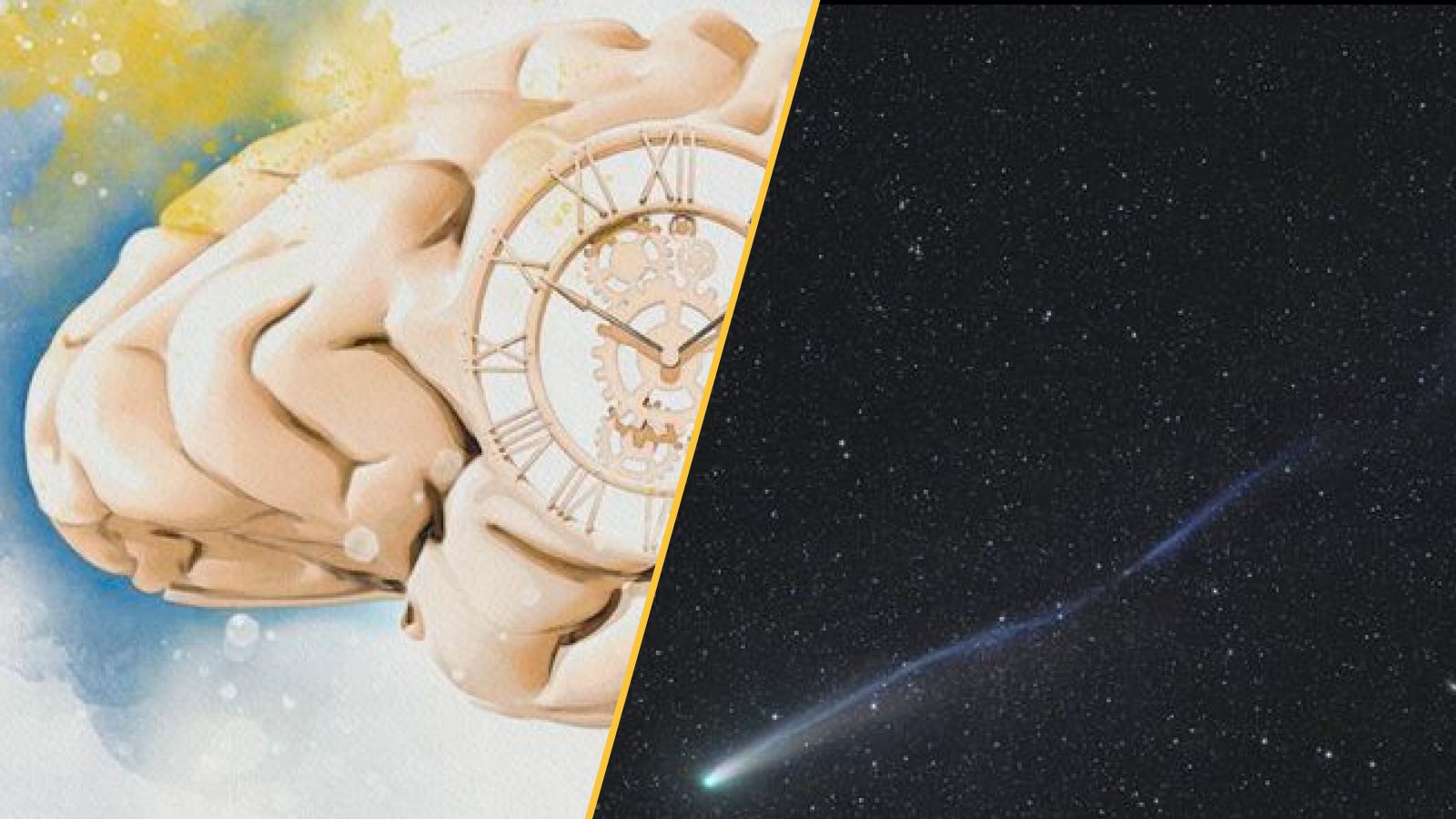

"Cosmic Wonders: This Week’s Stunning Comet Sightings and Asteroid Discoveries!"
Cosmic Wonders: A Week of Comets and Asteroids
This week has been a remarkable one for astronomy enthusiasts, with a trio of comets captivating the attention of skywatchers and scientists alike. Comets Lemmon and SWAN have reached their peak brightness, while Comet 3I/ATLAS is making headlines as it approaches its closest point to the Sun. Here’s a detailed look at these celestial phenomena and their implications for our understanding of the universe.
Comets Lemmon and SWAN: A Celestial Spectacle
Comets Lemmon and SWAN have dazzled observers this week, with both reaching their brightest states. According to reports from Live Science, these comets have become easily visible to the naked eye, providing a unique opportunity for amateur astronomers and casual stargazers.
Stunning Observations:
- Auroras Over Scotland: Comet Lemmon was recently photographed soaring through a vibrant auroral display in Scotland, creating a breathtaking visual spectacle. The interplay of the comet’s tail with the colorful auroras offered a rare and beautiful sight.
- Solar Wind Effects: In another striking event, Lemmon’s tail was temporarily shredded by solar winds while it passed over Czechia, illustrating the dynamic interactions between comets and solar activity. This phenomenon highlights the influence of solar winds on cometary structures, a topic of ongoing research.
Comet 3I/ATLAS: Approaching Perihelion
Meanwhile, Comet 3I/ATLAS is gaining attention as it approaches perihelion, the point in its orbit where it is closest to the Sun. Recent images reveal a prominent jet shooting from the comet, raising questions about its composition and behavior. As noted in Live Science, this jet is a result of the comet’s volatile materials sublimating due to solar heat.
Clarifying Misconceptions:
Despite the excitement surrounding 3I/ATLAS, some online speculation has suggested it could be an alien spacecraft. However, experts assert that the comet’s characteristics align with known cometary behavior, dismissing these theories as unfounded.
Asteroid Discoveries: A Skyscraper-Sized Surprise
In addition to the cometary news, astronomers have made significant discoveries regarding asteroids. A recently identified skyscraper-sized asteroid was found hiding behind the Sun’s glare, moving at a near-record pace. This discovery underscores the challenges astronomers face in tracking near-Earth objects, particularly those obscured by solar brightness.
Moreover, NASA’s plans to visit the asteroid Apophis, known as the "god of Chaos," have been secured following a last-minute budget decision. This mission aims to gather crucial data about the asteroid, which has been the subject of much speculation regarding its potential impact on Earth.
The Milky Way’s Mysterious Glow: Dark Matter Insights
In a related development, researchers have proposed that a mysterious glow at the center of the Milky Way galaxy may provide clues about dark matter. A recent study utilizing high-resolution supercomputer simulations suggests that colliding pockets of dark matter could be reshaping our understanding of this elusive component, which is believed to constitute approximately 85% of the universe’s matter.
This research could pave the way for the first detection of dark matter, addressing one of the most significant mysteries in modern astrophysics.
Conclusion
This week’s astronomical events have not only provided stunning visuals for skywatchers but also deepened our understanding of the cosmos. As comets and asteroids continue to intrigue scientists, ongoing research will likely yield new insights into the formation and behavior of these celestial bodies. Stay tuned for more updates as we explore the wonders of our universe.