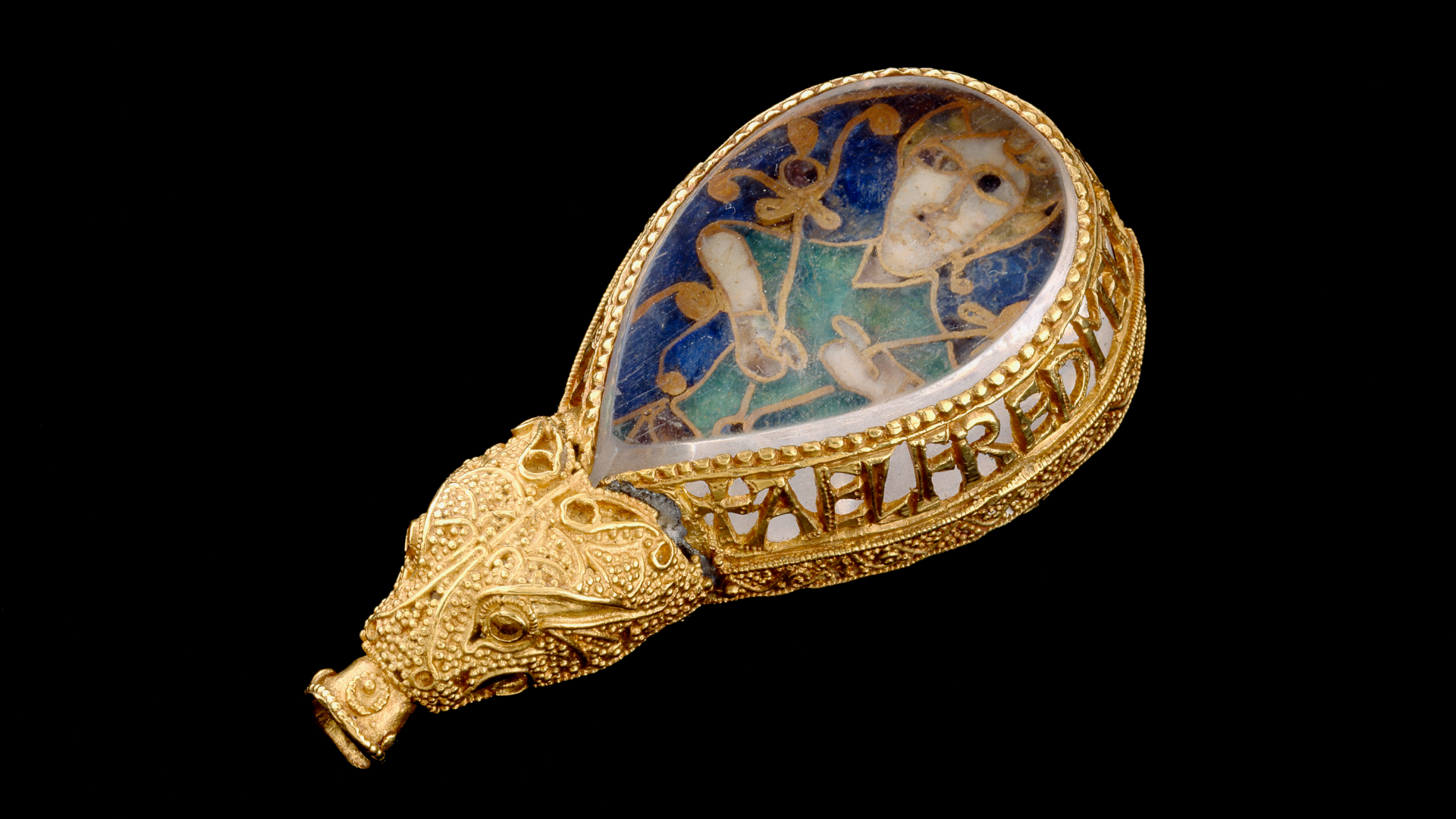

Unveiling History: The Alfred Jewel – A Glimpse into the Legacy of King Alfred the Great
Discover the captivating story behind this exquisite gold-encased cloisonné gemstone, a remarkable artifact from the heart of medieval England!
The Alfred Jewel: A Glimpse into Anglo-Saxon Heritage
Overview
The Alfred Jewel, a remarkable artifact from the late 9th century, is a gold-encased cloisonné gemstone that has captivated historians and archaeologists alike. Discovered in 1693 by a farmer plowing his field in North Petherton, Somerset, England, this exquisite piece of craftsmanship not only showcases the artistry of the time but also bears a significant inscription that links it directly to one of England’s most revered monarchs, King Alfred the Great.
Historical Context
Discovery and Description
The jewel measures approximately 2.4 by 1.2 inches (6.2 by 3.1 centimeters) and features a design composed of numerous small cells filled with vibrant enamel paste, accented by delicate strips of gold. At its center, it depicts a figure from the mid-thighs up, surrounded by an inscription in Old English: "AELFRED MEC HEHT GEWYRCAN," translating to "Alfred ordered me to be made." This inscription is pivotal, as it directly associates the jewel with King Alfred, who ruled from A.D. 871 to 899.
King Alfred the Great
Alfred the Great is renowned for his military acumen, particularly in repelling Viking invasions during the late 9th century. His reign marked a significant period in English history, as he expanded his influence from the kingdom of Wessex to encompass all of England by 886. Beyond his military prowess, Alfred was a scholar and a patron of education, known for translating religious texts from Latin into Old English, thus making them accessible to a broader audience. The Alfred Jewel is believed to have served as the end of an aestel, a type of pointer used to keep one’s place while reading these texts.
Significance of the Jewel
Artistic and Cultural Importance
The craftsmanship of the Alfred Jewel reflects the high level of artistry achieved during the Anglo-Saxon period. The intricate cloisonné technique, which involves creating compartments (cloisons) filled with colored enamel, showcases the skill of artisans of the time. The jewel’s design and materials indicate that it was likely a prestigious object, possibly used by Alfred himself or gifted to a high-ranking official.
Archaeological Context
The jewel was found near Athelney Abbey, a site of great historical significance. According to historical accounts, Alfred took refuge at Athelney during his struggles against the Danish Vikings. After regrouping, he launched a successful counter-attack in 878, which was pivotal in reclaiming southern England. Following his victory, Alfred established a monastery at Athelney, further solidifying its importance in Anglo-Saxon history.
Current Location and Legacy
Today, the Alfred Jewel is housed in the Ashmolean Museum at the University of Oxford, where it is regarded as one of the most significant royal relics of its time. The museum emphasizes its connection to King Alfred, highlighting its role in understanding the cultural and political landscape of early medieval England.
Ongoing Research and Interest
The jewel continues to be a subject of research and fascination. Scholars are particularly interested in its implications for understanding the socio-political dynamics of the time, as well as its artistic techniques. The ongoing study of such artifacts contributes to a deeper understanding of the Anglo-Saxon era and its legacy in shaping modern England.
Conclusion
The Alfred Jewel stands as a testament to the artistry, culture, and historical significance of the Anglo-Saxon period. Its intricate design and direct connection to King Alfred the Great make it not only a remarkable artifact but also a vital piece of England’s heritage. As research continues, the jewel will undoubtedly provide further insights into the complexities of early medieval life and governance.