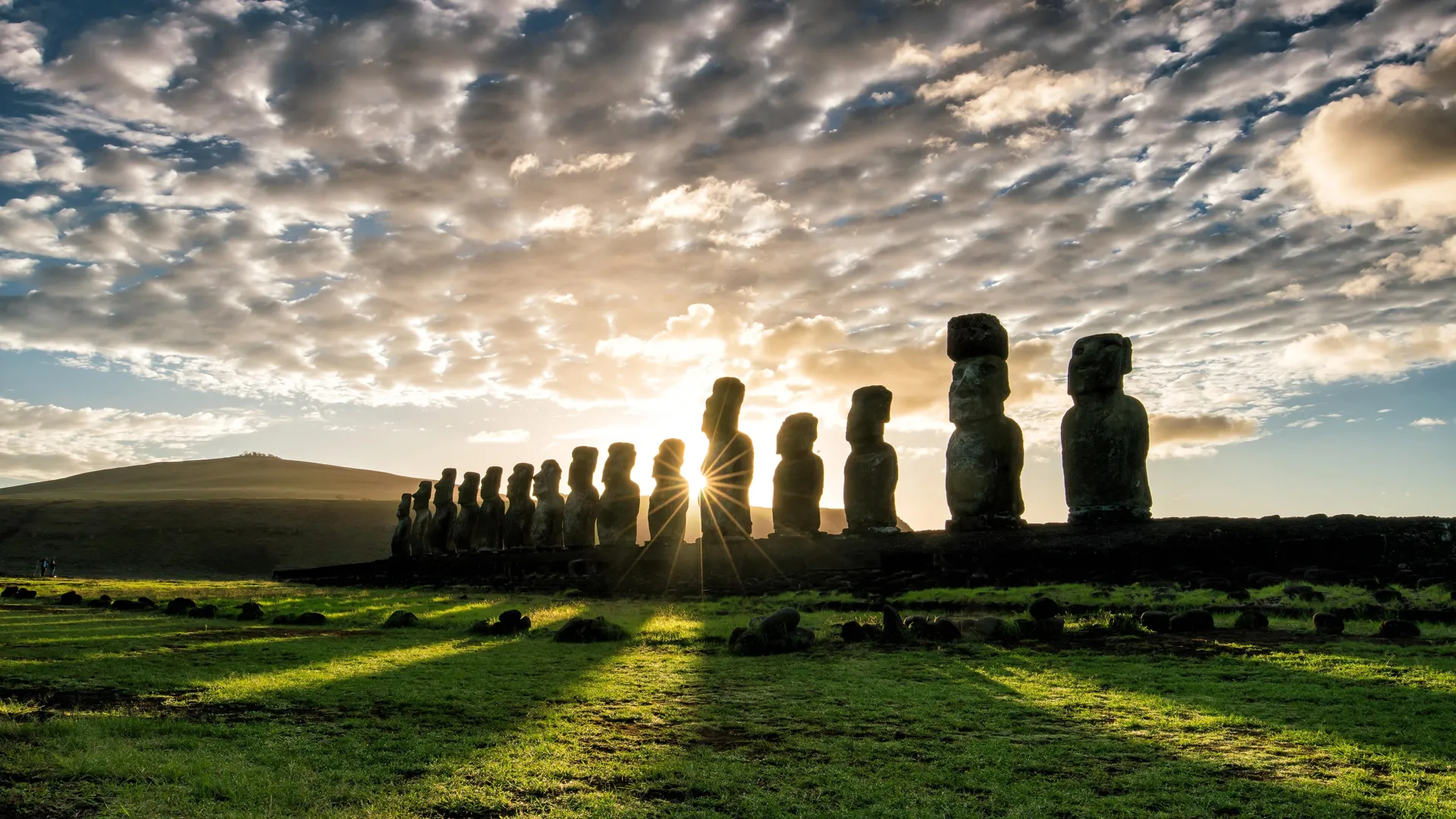

"Ahu Tongariki at Risk: Rising Sea Levels Threaten Rapa Nui’s Cultural Heritage by 2080"
Rising Sea Levels Threaten Rapa Nui’s Cultural Heritage by 2080
A recent study published in the Journal of Cultural Heritage by researchers from the University of Hawai’i at Mānoa has revealed alarming projections regarding rising sea levels and their potential impact on Rapa Nui, also known as Easter Island. The study indicates that seasonal waves could reach Ahu Tongariki, the island’s iconic ceremonial platform, by the year 2080. This coastal flooding poses a significant threat to up to 51 cultural assets in the area, including the world-renowned moai statues, which are integral to Rapa Nui’s identity and tourism.
Urgent Findings
Lead author Noah Paoa, a doctoral student in the Department of Earth Sciences at UH Mānoa, emphasized the critical nature of these findings. "This research reveals a critical threat to the living culture and livelihood of Rapa Nui," he stated. The moai statues and other cultural sites are not merely historical artifacts; they are vital to the community’s identity and play a crucial role in the island’s tourism-driven economy. The potential loss of these sites could jeopardize Rapa Nui’s status as a UNESCO World Heritage site.
Co-author Chip Fletcher, dean of the School of Ocean and Earth Science and Technology (SOEST), highlighted the broader implications of the study. "As we work to understand the impacts of future sea level rise, we provide information that enables us to maintain safe, functional spaces and infrastructure, while also supporting thriving communities," he said. The study underscores the necessity of documenting threats to culturally significant places and developing plans to preserve them.
Methodology and Findings
The research team employed advanced computer modeling techniques to create a detailed digital twin of the study site. This model allowed them to simulate the wave environment along the coastline and map projected flooding scenarios under various sea level rise conditions. By overlaying this flood extent on geospatial layers containing the locations of cultural assets, the researchers identified which sites would be at risk.
Paoa noted, "Unfortunately, from a scientific standpoint, the findings are not surprising. We know that sea level rise poses a direct threat to coastlines globally. The critical question was not if the site would be impacted, but how soon and how severely." The study’s projections indicate that waves could reach Ahu Tongariki by 2080, providing urgent data that could spur community discussions and planning.
Broader Context
The challenges facing Rapa Nui are not unique; they reflect a global crisis affecting coastal areas, including Hawai’i. Paoa pointed out that while Hawai’i is actively working to protect its coastal infrastructure, the irreplaceable cultural heritage sites in the region face similar threats. "Our research in Rapa Nui serves as a vital blueprint," he explained, "demonstrating how we can use science to forecast risks to sacred places, such as coastal heiau and ancestral burial sites."
Future Research and Collaboration
Paoa is currently utilizing available data on coastal flooding to assess potential sea level rise impacts on cultural assets in Hawai’i. Looking ahead, he and his research team plan to collaborate with local partners in Rapa Nui to further investigate the potential impacts of sea level rise on the island’s coastal cultural assets. They aim to explore adaptation and mitigation strategies to safeguard this invaluable cultural heritage.
As the clock ticks toward 2080, the urgency for action grows. The findings of this study not only highlight the immediate risks posed by climate change but also serve as a call to action for communities, policymakers, and researchers alike to prioritize the preservation of cultural heritage in the face of rising seas.