
"Japan Unveils Its First Homegrown Quantum Computer: A Leap into the Future of Computing!"
Japan Launches Its First Homegrown Quantum Computer at Osaka University
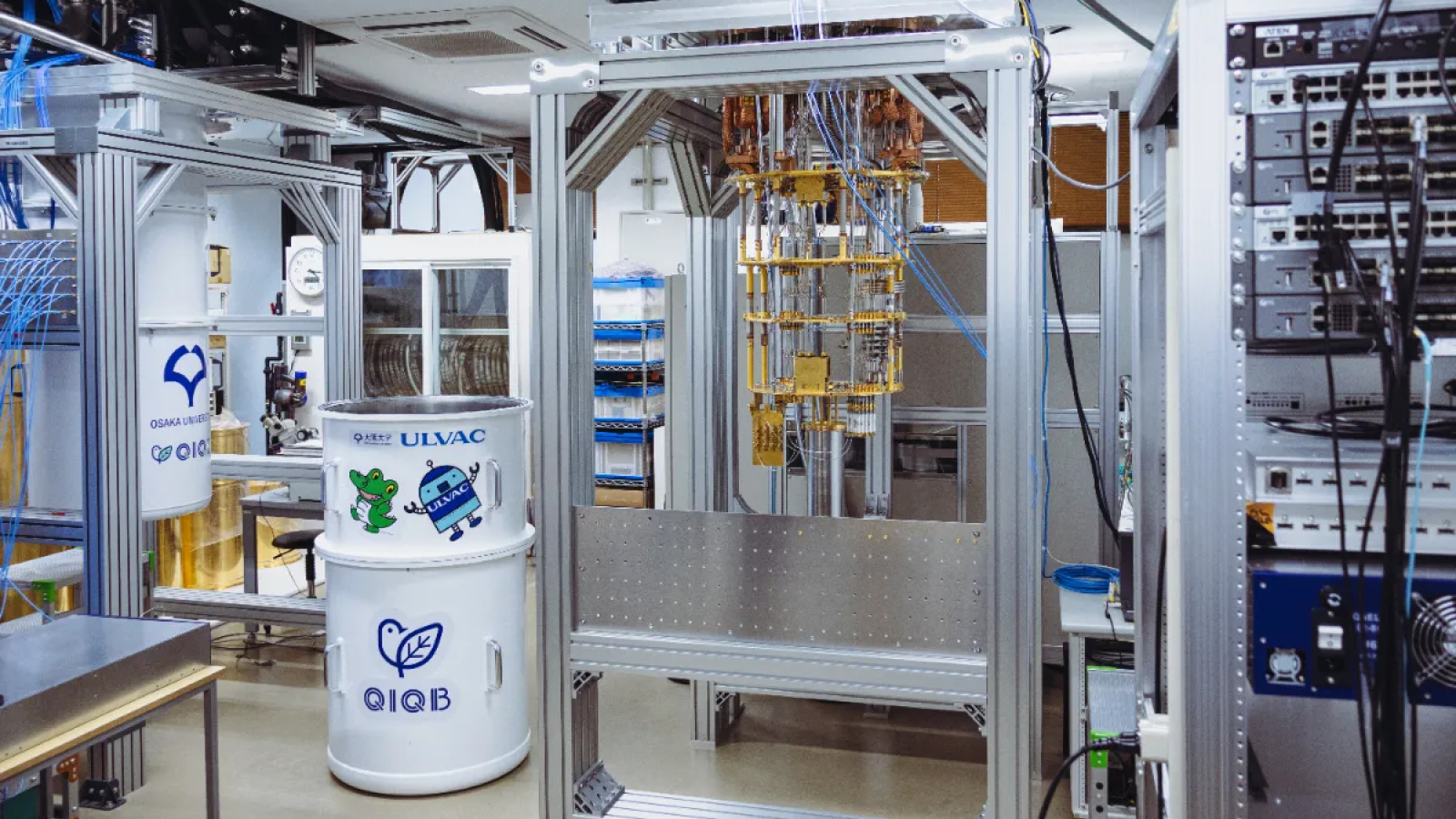
Osaka, Japan — On July 28, 2023, Japan marked a significant milestone in the realm of quantum computing with the activation of its first domestically designed and built quantum computer. Located at the University of Osaka’s Center for Quantum Information and Quantum Biology (QIQB), this groundbreaking system is poised to tackle complex computational workloads using entirely homegrown components.
A Leap in Quantum Technology
The newly operational quantum computer replaces all previously imported parts with advanced technologies developed within Japan. University representatives emphasized that this initiative not only showcases national capabilities but also aims to enhance the country’s position in the global quantum computing landscape. The system operates on the Open Quantum Toolchain for Operators and Users (OQTOPUS), an open-source software platform developed in Japan, which facilitates the execution of quantum programs.
Technical Specifications
At the heart of this quantum computer lies a quantum chip utilizing superconducting qubits. These qubits are derived from materials that exhibit zero electrical resistance when cooled to near absolute zero (approximately -273.15 degrees Celsius or -459.67 degrees Fahrenheit). The quantum processing unit (QPU) was developed by RIKEN, a prominent Japanese research institute known for its contributions to advanced scientific research.
The system’s architecture resembles a chandelier, comprising various essential components including:
- Chip Package: Delivered by Seiken, this package houses the quantum chip.
- Magnetic Shield: Protects the qubits from external magnetic interference.
- Infrared and Bandpass Filters: Essential for managing the wavelengths of light used in quantum operations.
- Low-Noise Amplifier: Enhances signal clarity, crucial for accurate quantum computations.
- Cabling: Connects all components while minimizing interference.
These components are housed within a dilution refrigerator, a specialized cryogenic device that maintains the extremely low temperatures necessary for quantum operations. Additionally, a pulse tube refrigerator is employed to further cool various system components, ensuring optimal performance.
OQTOPUS: The Software Backbone
OQTOPUS serves as a comprehensive suite of open-source tools designed to facilitate quantum programming. It includes a core engine, cloud module, and graphical user interface (GUI) elements, enabling users to interact seamlessly with the quantum hardware. This software framework is crucial for researchers and developers looking to leverage quantum computing for various applications.
The Promise of Quantum Computing
Quantum computing holds the potential to surpass the capabilities of the world’s fastest supercomputers, enabling solutions to complex problems that are currently intractable. Applications range from drug discovery and traffic optimization to logistics and supply chain management. The unique ability of quantum computers to perform calculations in parallel, leveraging the principles of quantum mechanics, positions them as transformative tools for various industries.
However, challenges remain, particularly concerning the high error rates associated with quantum calculations. Current research is heavily focused on quantum error correction (QEC) techniques to mitigate these issues, allowing for more reliable and efficient quantum computations.
Public Engagement and Future Prospects
Japan’s first quantum computer was prominently featured at Expo 2025, held in Osaka from August 14 to August 20. The exhibition allowed visitors to connect to the quantum system remotely via the cloud and run basic quantum programs. Interactive displays provided insights into quantum phenomena, including quantum entanglement, fostering public interest and understanding of this cutting-edge technology.
As Japan continues to invest in quantum research and development, the successful launch of this homegrown quantum computer marks a pivotal step toward establishing a robust national framework for quantum technology, with implications that could resonate across multiple sectors in the years to come.