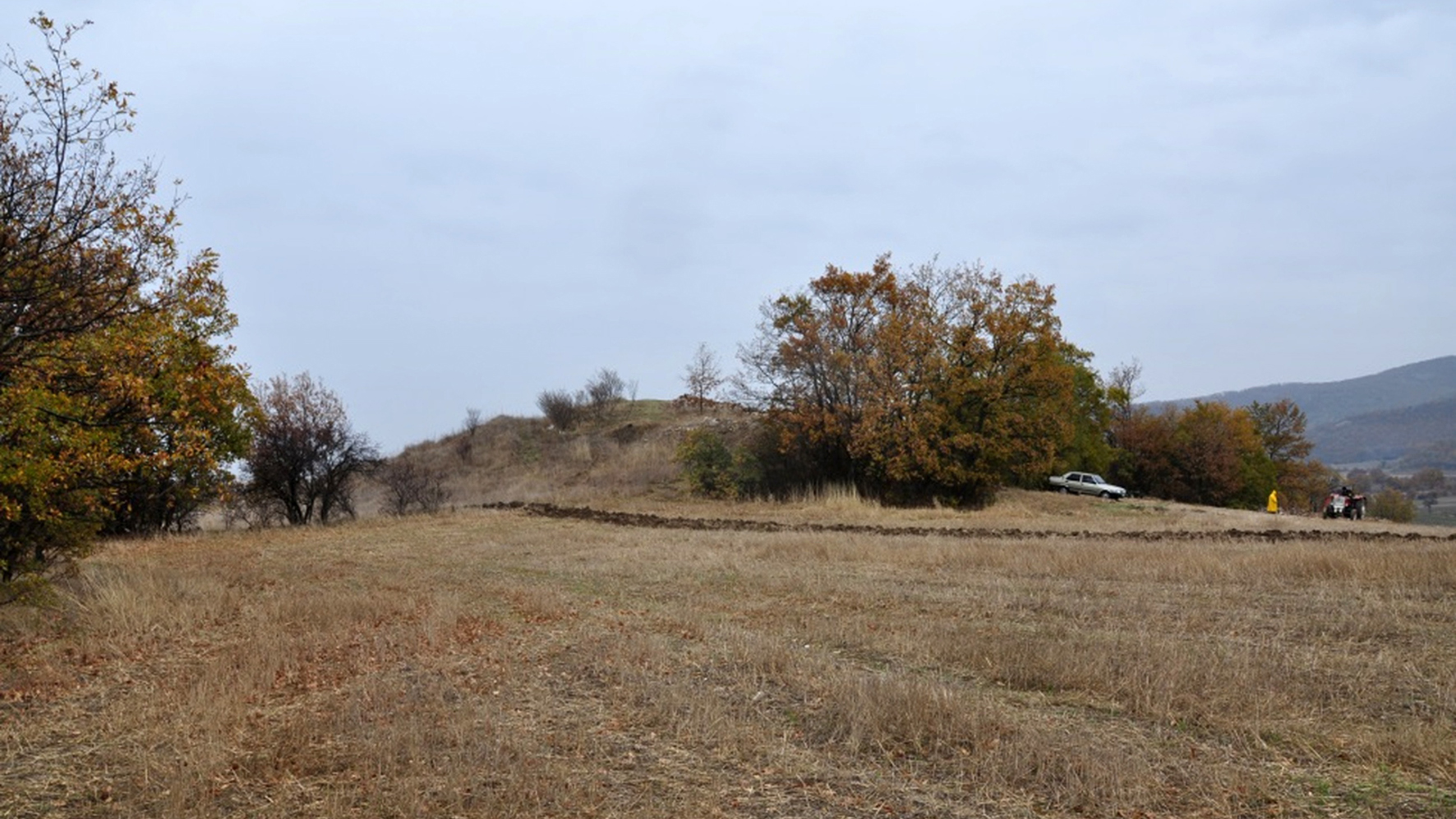

Unearthing Royal Secrets: Tomb Linked to King Midas’ Family Discovered in Turkey!
Discovery of Ancient Tomb in Turkey Linked to King Midas’ Family
Bozüyük, Turkey — Archaeologists have uncovered a remarkable ancient tomb in the Karaağaç Tumulus, located in Turkey’s northwestern Bozüyük district, which may belong to a member of the family of the legendary King Midas. This discovery, dating back to the eighth century B.C., sheds new light on the political structure of the ancient Phrygian kingdom, known for its rich cultural heritage and the myth of Midas, who possessed the fabled "golden touch."
A Royal Connection?
The Karaağaç Tumulus, situated over 100 miles from the ancient capital of Gordion, challenges the long-held belief that Phrygian society was politically centralized. Archaeologist Hüseyin Erpehlivan from Bilecik University, who has been leading the excavation since its inception in 2010, noted that the tomb’s remote location suggests a more distributed political power across the region. "Historically, Phrygia was often viewed as a centralized kingdom similar to the Assyrian or Urartian empires," Erpehlivan explained. "However, this tomb indicates that the Phrygian political organization was not limited to a strictly centralized, urban-focused system."
The findings from the tumulus, which stands approximately 26 feet high and has a diameter of about 110 feet, include lavish grave goods that may signify a royal burial or a significant gift exchange involving an elite individual with connections to the royal family. The presence of ornate artifacts, such as situlas—decorative bronze vessels—hints at the deceased’s elevated status within Phrygian society.
Architectural Insights
The architectural features of the tomb are noteworthy. The wooden-chambered structure resembles elite burials found near Gordion, while the grave goods align with those typically associated with royal interments. Erpehlivan stated, "These aspects of the burial exceed what would be expected for a purely local, non-elite individual, instead pointing to a figure embedded within Phrygian power structures."
Among the grave goods, researchers discovered numerous ceramic jars, including one inscribed with a Phrygian name, and several situlas adorned with intricate scenes of battles and processions. The situlas are particularly significant, as they were previously only documented in the "Midas Mound" at Gordion, believed to be the tomb of Midas’ father, Gordias. This connection helps date the Karaağaç Tumulus to between 740 and 690 B.C.
The Legacy of King Midas
King Midas, a historical figure from the eighth century B.C., is best known for the myth that bears his name, which cautions against greed. The ancient Greeks viewed him as a symbol of wealth, and archaeological findings have supported this notion, revealing ornate metalwork, jewelry, and fine textiles in various Phrygian royal tombs. Despite extensive excavations, the actual tomb of Midas remains undiscovered, making the Karaağaç Tumulus a tantalizing lead in understanding his legacy.
Human Remains and Historical Context
While human remains were found within the Karaağaç Tumulus, they are believed not to belong to the original occupant. Some bones are from an ancient cemetery that predated the tumulus, while others are from later burials. Brian Rose, an archaeologist from the University of Pennsylvania, remarked on the significance of the discovery, noting that it provides valuable information about the burial practices during Midas’ reign.
Ongoing Research and Implications
The Karaağaç Tumulus stands as a unique archaeological site, containing graves that span nearly three millennia. As research continues, the implications of this discovery may reshape our understanding of Phrygian society and its political dynamics. Maya Vassileva from New Bulgarian University emphasized the importance of the findings, although she expressed caution regarding the interpretation of the situlas as definitive evidence of royal status.
As excavations progress, the Karaağaç Tumulus may offer further insights into the enigmatic world of the Phrygians and their legendary king, Midas, whose tale continues to captivate imaginations across centuries.