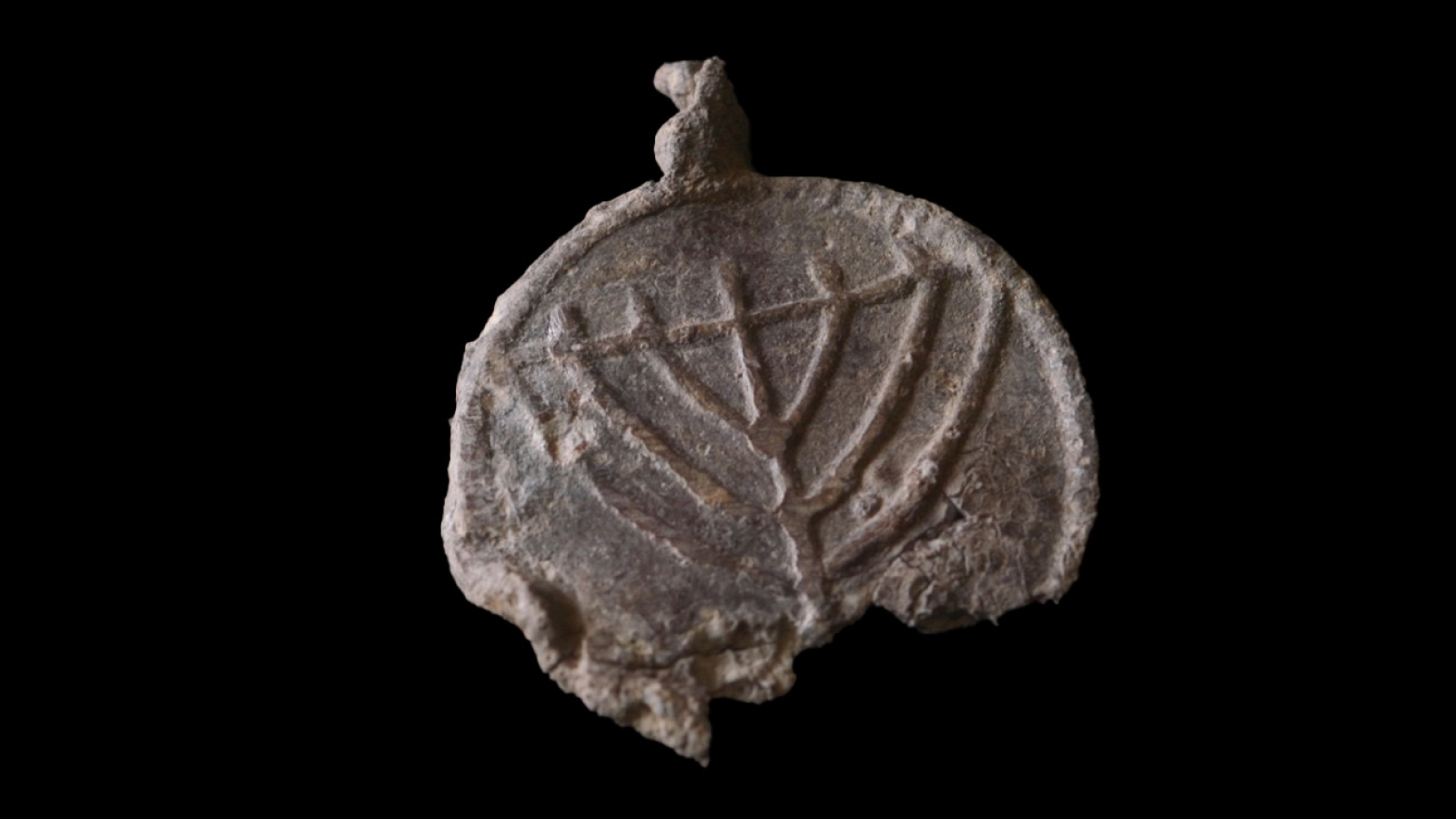

Unearthing History: A 1,300-Year-Old Menorah Medallion Discovered in Jerusalem’s Ancient City of David
This captivating find sheds light on the Jewish presence in a city once forbidden to them, revealing layers of cultural and historical significance.
Archaeological Discovery: 1,300-Year-Old Lead Medallion Unearthed in Jerusalem
Jerusalem, Israel — In a remarkable archaeological find, researchers have uncovered a rare 1,300-year-old lead medallion adorned with a seven-branched menorah, a symbol deeply rooted in Jewish heritage. This significant artifact was discovered at the "City of David" archaeological site, located near the southwest corner of Jerusalem’s Temple Mount, an area now home to several Islamic holy sites.
Historical Context
The medallion dates back to the late sixth or early seventh century, a period when Jerusalem was under the control of the Byzantine Empire. This era was marked by significant religious and political transitions, as the city faced invasions first by the Sasanian Persians in 614 and later by Arab Islamic forces around 638. The medallion’s discovery is particularly intriguing given that Jews were largely prohibited from entering Jerusalem following the failed Bar Kochba Revolt (132-136 CE), which led to the Roman Emperor Hadrian’s decree to rebuild the city as "Aelia Capitolina."
The Discovery
Ayayu Belete, an archaeological worker for the City of David Foundation, described the moment of discovery: "One day while I was digging inside an ancient structure, I suddenly saw something different, gray, among the stones. I picked up the object and saw that it was a pendant with a menorah on it." The medallion was found within a Late Byzantine-era building, buried beneath rubble from construction activities initiated by the Umayyad rulers shortly after the Islamic conquest.
Description of the Medallion
The medallion is disc-shaped, featuring a loop at the top for attachment. Both sides are intricately decorated with the seven-branched menorah, a ceremonial candlestick that was exclusively used in Jerusalem’s Second Temple, which was destroyed by the Romans in 70 CE. The design includes horizontal crossbars atop each candlestick branch, with flames depicted rising above them. While one side of the medallion is well-preserved, the other is partially obscured by a natural patina resulting from weathering. Analysis indicates that the medallion is primarily composed of lead.
Significance of the Find
This medallion is only the second of its kind ever discovered, making it an exceptionally rare artifact. According to archaeologists from the Israel Antiquities Authority (IAA), the presence of the menorah on both sides of the medallion underscores its profound significance. "A pendant made of pure lead, decorated with a menorah, is an exceptionally rare find," noted IAA archaeologists Yuval Baruch, Filip Vukosavović, Esther Rakow-Mellet, and Shulamit Terem in a statement. They emphasized that the dual depiction of the menorah suggests its importance as a symbol of Jewish identity and faith.
Cultural Implications
The medallion’s discovery raises questions about the Jewish presence in Jerusalem during a time when they were ostensibly barred from the city. Günter Stemberger, an emeritus professor of Jewish Studies at the University of Vienna, pointed out that while Jews were generally prohibited from entering Jerusalem, there were instances when these restrictions were relaxed. This suggests that some Jews may have visited the city for trade, administrative purposes, or even clandestine pilgrimages.
The medallion likely served as an amulet for magical protection rather than merely as jewelry. Lead was a common material for amulets during this period, believed to possess protective qualities. Baruch remarked, "The fact that the medallion was made from lead indicated it was worn as an amulet — and probably hidden — rather than as jewelry."
Conclusion
The discovery of this lead medallion not only enriches our understanding of Jewish history in Jerusalem but also highlights the complexities of cultural identity during a tumultuous period. As archaeologists continue to explore the "City of David," further findings may shed light on the lives of those who navigated the challenges of faith and identity in a city marked by profound historical significance.