
"Dinosaur Tracks Discovered in the Alps: A Prehistoric Surprise Before the Winter Olympics!"
Discovery of Ancient Dinosaur Tracks in Northern Italy’s Alps
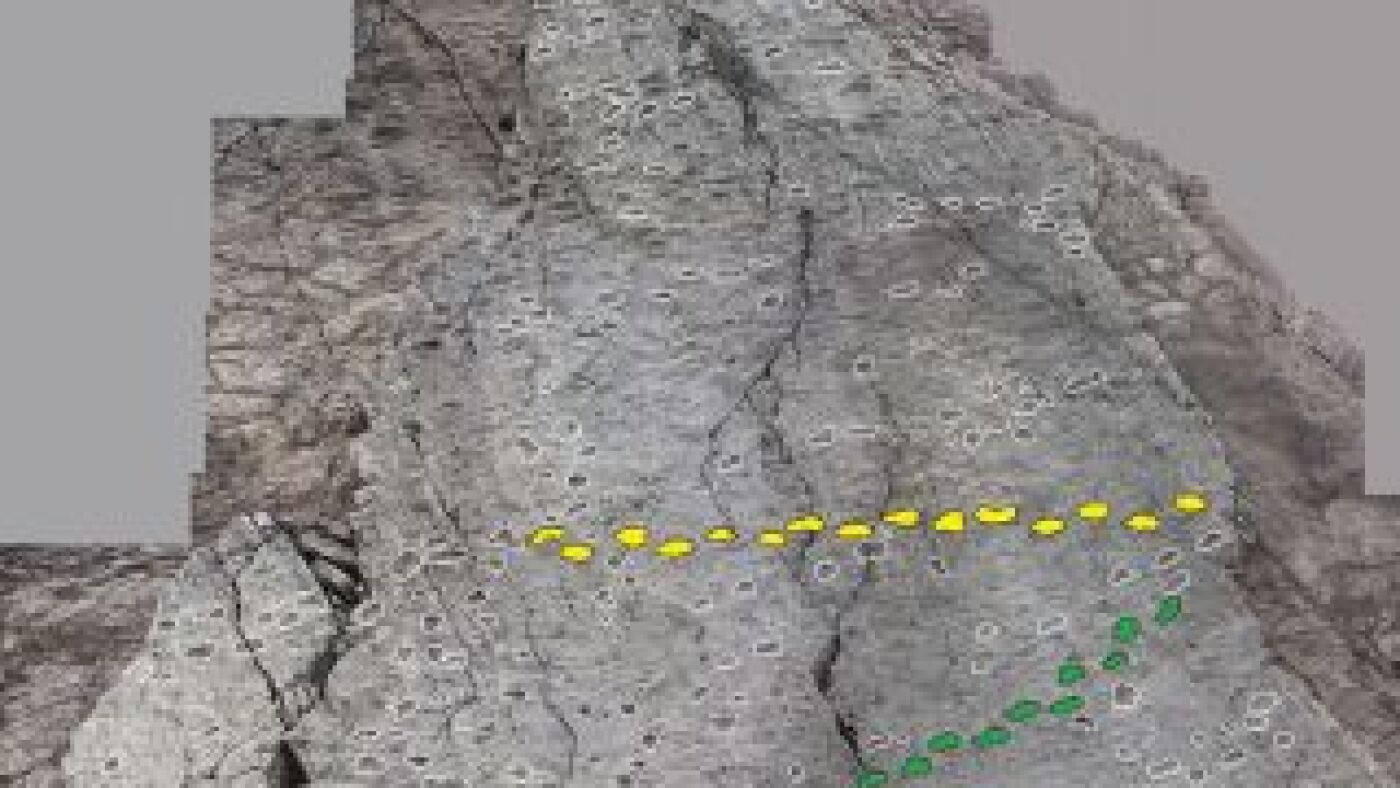
Milan, Italy — In a remarkable paleontological find, Italian officials announced on Tuesday the discovery of thousands of dinosaur tracks embedded in nearly vertical dolomite walls within Stelvio National Park, a protected area in the central Alps. This significant discovery, made just weeks before the Milan-Cortina 2026 Winter Olympics, has captivated scientists and the public alike.
A Geological Treasure Trove
The tracks, believed to be approximately 210 million years old, date back to the Late Triassic period. The Milan Natural History Museum has described the site as "the largest in the Alps and one of the richest in the world," spanning roughly three miles. The prints were located between the towns of Livigno and Bormio, where various Olympic events will take place, including freestyle skiing and alpine skiing.
Milan Mayor Giuseppe Sala remarked, "This discovery sheds an unexpected and fascinating light on the mountains of Lombardy," emphasizing the significance of the find in the context of the upcoming Olympic Games.
The Discovery Process
Nature photographer Elio Della Ferrara stumbled upon the tracks in September while exploring the Fraele Valley, an area known for its dramatic landscapes and artificial lakes. While photographing a vertical rock wall approximately 2,000 feet above the nearest road, Della Ferrara noticed unusual markings. Upon closer inspection, he discovered what he described as "tens of thousands" of dinosaur tracks.
Della Ferrara promptly notified local authorities, prompting a wave of paleontological research. Preliminary analyses suggest that the majority of the tracks belong to herbivorous prosauropod dinosaurs, long-necked creatures that predate the more massive sauropods commonly depicted in popular media.
Scientific Significance
The tracks are exceptionally well-preserved, showcasing clear imprints of toes and claws. According to the Natural History Museum, these prints were formed when the area was once tidal flats, which later transformed into rock as the Alps were formed. The discovery marks the first instance of dinosaur tracks found in the Lombardy region and the only ones identified north of the Insubric Line, a significant tectonic boundary that delineates the southern edge of the Alps.
Experts believe that prosauropods primarily roamed northern Europe, with fossils having been discovered on most continents, particularly in Germany. However, many aspects of their biology and evolutionary relationships remain poorly understood, and this discovery could provide valuable insights into their history.
Future Research and Accessibility
The area where the tracks were found is not easily accessible by conventional trails, which poses challenges for researchers. To study the site further, scientists will employ drones and remote sensing technologies. While the tracks may not be open to the public in the near future, the discovery adds a layer of intrigue to the Olympic venues, as athletes will be competing in the shadows of ancient giants.
Mayor Sala expressed optimism about the ongoing studies, stating, "The studies that will continue following the discovery of these footprints will allow us to better understand the history of our planet and the land we inhabit."
As the world gears up for the Winter Olympics, this extraordinary find serves as a reminder of the rich and complex history that lies beneath the surface of our planet, waiting to be uncovered.